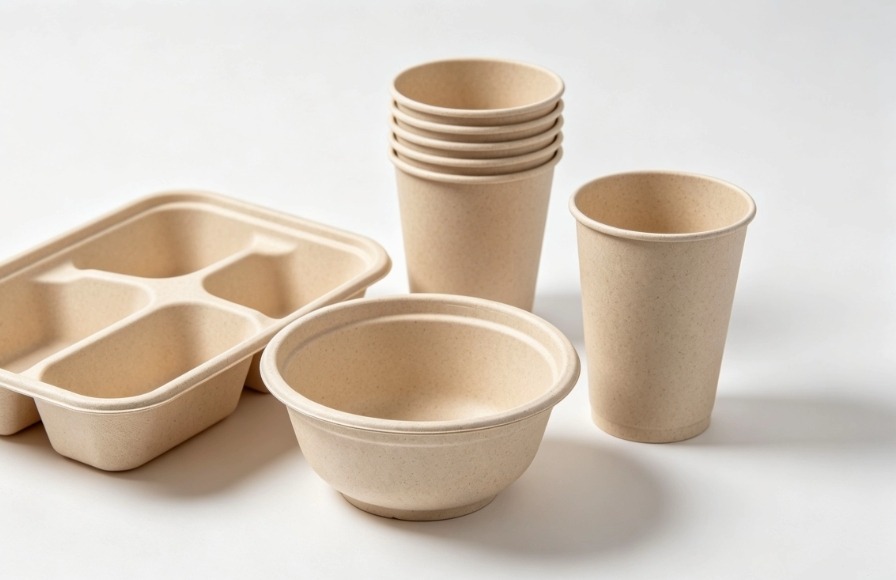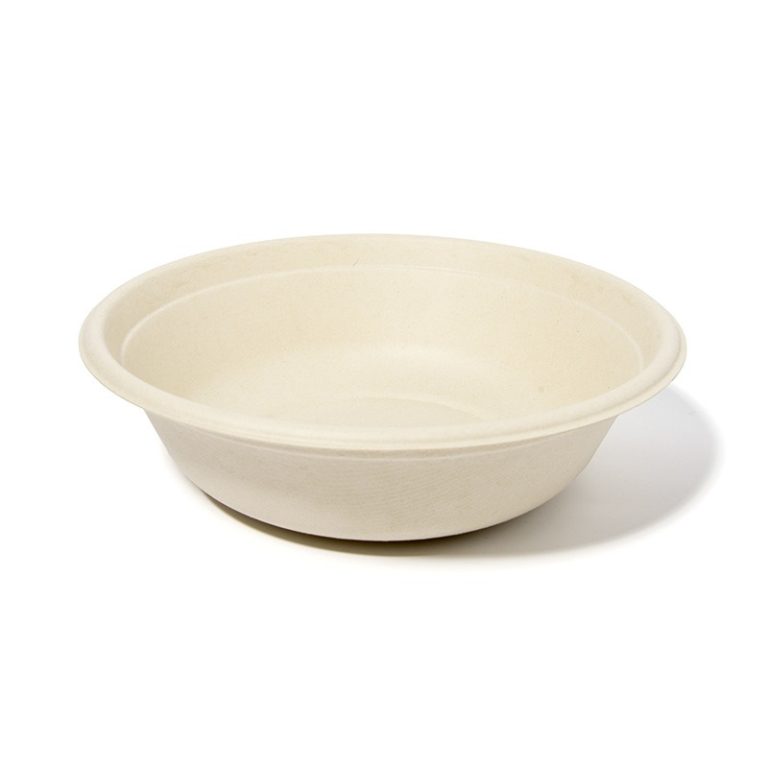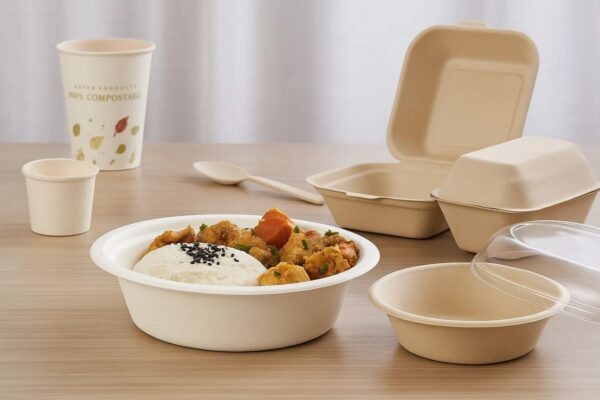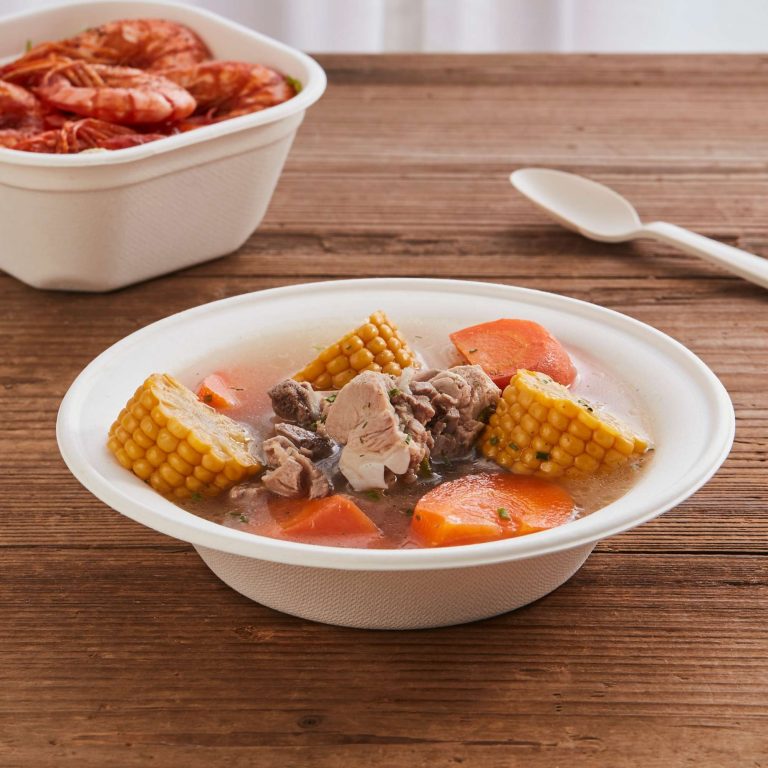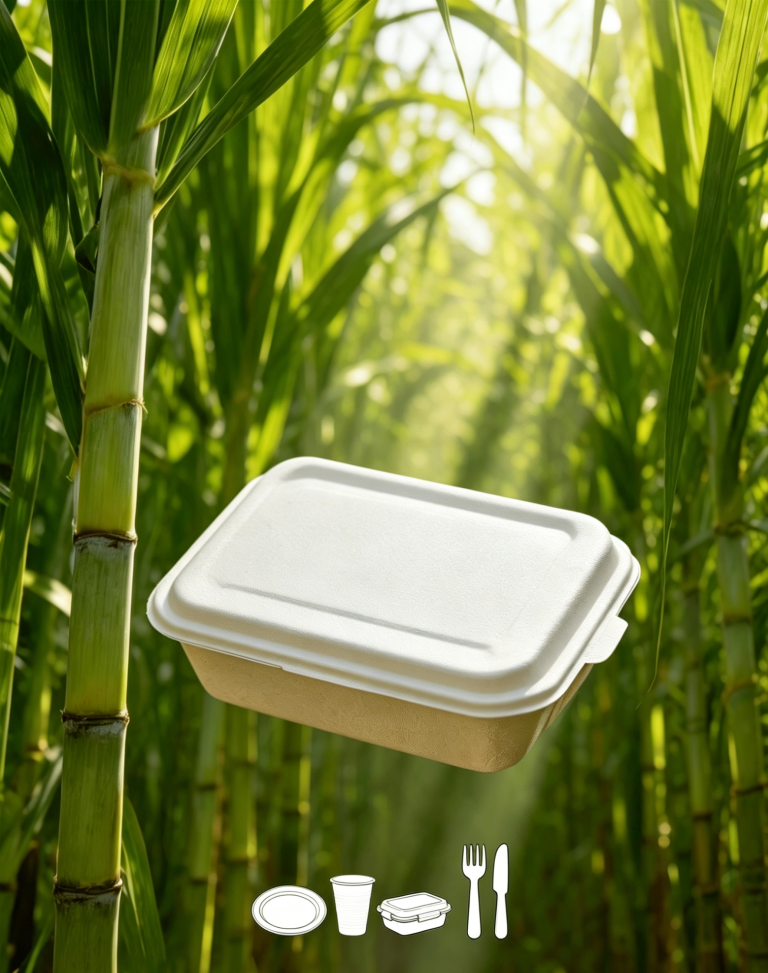
The most remarkable feature of the rice husk disposable tableware is its environmental friendliness. Rice husks are by-products of the rice processing process and are widely available and renewable. Using rice husks to make tableware not only realizes the high-value utilization of agricultural waste, reduces resource waste, but also effectively reduces air pollution caused by burning rice husks. According to statistics, the amount of rice husks produced in China each year is huge. Reasonable utilization of these rice husks to make tableware can, to a certain extent, alleviate environmental pressure.
The core advantages of rice husk tableware:
1. Natural material: Made from natural rice husks, it is not prone to bacterial growth and undergoes multiple sterilization and disinfection processes. It is safe and reliable to use and suitable for scenarios that require high natural material standards.
2. Feel and experience: The natural material is smooth and natural, with a rice fragrance, and has a good feel. There are various capacity and packaging options available to meet diverse needs.
3. Environmental and health: As disposable items, its degradability and environmental friendliness are superior to plastic bowls and imitation porcelain bowls, reducing the risk of environmental pollution.
From a production perspective, there is a well-known technical challenge associated with sugarcane residue tableware – the scaling problem.
The fine fibers in sugarcane residue fibers carry waterproof and oil-resistant agents during the production process. During the hot pressing stage, these fibers deposit on the equipment pipes and molds, forming brown scale. This leads to two issues: one is that quality defects such as bulges may appear on the product surface; the other is that if the supplier’s process is not up to standard, the supply stability will be affected.
The main problems with sugarcane tableware lie in “using hot water” and “safety”:
1. Prolonged soaking in hot water can cause “softening” and even leakage
Slight deformation: After pouring boiling water for about 10 minutes, the cup wall or bottom will become soft, and the feel is not as solid as that of plastic tableware.
Slow water seepage: It has been measured that when using it to hold hot water, fine water droplets will seep out from the bottom. Although it does not affect the appearance after drying, it will leave a bad impression on customers that “it doesn’t leak reliably”. If your takeout menu mainly features soup-based dishes, this aspect needs to be tested particularly.
2. Chemical residue risks: PFAS and formaldehyde are the two “red zones”
This is the most critical controversy faced by sugarcane fiber tableware at present, directly affecting the safety of your business and the health of your users. Multiple authoritative tests and studies have pointed out the following risks:
Perfluoroalkyl substances (PFAS) risk: An international study in 2021 tested 23 types of sugarcane fiber tableware on the market, and all of them tested positive for PFAS (perfluoroalkyl substances, a type of waterproof and oil-resistant chemical substance), and the content was all above the standard. Some PFAS are suspected carcinogens, and long-term intake may affect health.
Melamine and formaldehyde risk: Many people are unaware that some plant fiber tableware (including sugarcane fiber) on the market will add melamine resin to shape. In 2023, a random inspection by Chinese official institutions found that the migration rate of melamine in such products was unqualified at 40.0%, and these toxic substances are very likely to migrate into food when used to hold high-temperature or acidic foods.
Label chaotic phenomena: Among the products randomly inspected in the same batch, the rate of disqualification labels was 100%. This means that many products will not clearly tell you that they have added plastic resin, and it is impossible to distinguish the authenticity of the product just by looking at the packaging.
Rice husk tableware has a high density, is extremely lightweight and has a compression performance similar to that of plastic. Some rice husk tableware is even shock-resistant and can be used repeatedly for a long time. From an environmental perspective, rice husk tableware is overall superior to sugarcane fiber tableware and is more suitable for use as disposable tableware. The key lies in better raw material recycling, carbon footprint and degradation safety. Rice husk tableware is suitable for high-temperature, greasy and long-term storage.
1. Degradation characteristics:
· Rice husk tableware: Completely degrades in natural environment within 3 to 6 months, decomposes into organic matter and silicon fertilizer in soil, with no residues or secondary pollution.
· Sugarcane fiber tableware: Degradates within 2 to 4 months, with a slightly faster rate; however, some products require chemical additives for waterproof and anti-oil properties, which may contain trace amounts of non-degradable substances.
2. Production and Pollution:
· Rice husk: Pressed at high temperature and high pressure without the use of plastic adhesives. Only a small amount of plant starch is added. It is free of fluorine and plasticizers, and has low production energy consumption.
· Sugarcane residue: Requires pulping and bleaching (part of the process). The pressure for wastewater treatment is high; high-end products often use fluorine-containing anti-oil coatings (PFAS), which are difficult to degrade and pose health risks.
3. Performance:
· Rice husk: Resistant to heat up to 120℃, suitable for microwave cooking, oil and water resistant, not prone to deformation, high in hardness, durable, suitable for hot food delivery.
· Sugarcane residue: Resistant to heat between 100-110℃, relatively soft texture, slightly weaker in load-bearing and leak-proof.
As for the disposable tableware business, the priority for environmental protection is: rice husk tableware > sugarcane fiber tableware > plastic tableware.
Rice husk disposable tableware has emerged as a new favorite in the field of environmental protection, thanks to its unique environmental advantages, bringing hope to the sustainable development of the disposable tableware industry. However, its shortcomings in terms of cost, performance and market promotion have also limited its wide application. With the continuous advancement of technology and the gradual maturation of the market, it is believed that rice husk tableware will be able to overcome its own flaws and occupy a more important position in the future tableware market, playing a greater role in protecting the environment and reducing pollution.