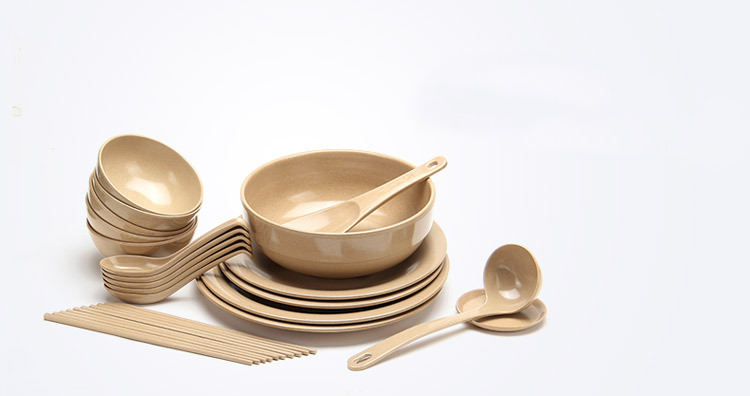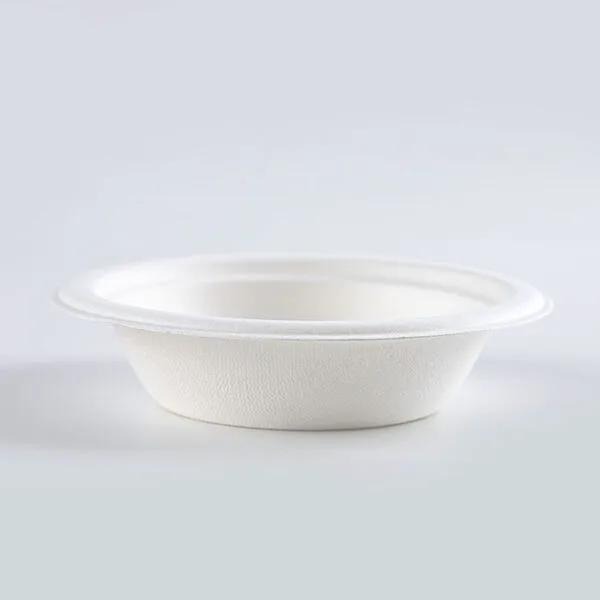
Rice husk tableware can usually be placed in the microwave, but only under specific conditions. They must bear the “Microwave Safe” label and should be heated for short durations (typically no more than 3 minutes) on low to medium power. Since they are often made by compressing a mixture of rice husk fibers and polypropylene (PP), improper use may still lead to deformation or release of microplastics.
Material Principle (Why There Are Usage Limitations):
· Genuine Structure: Made from rice husk fiber and food-grade natural resin (PLA), high-temperature compressed without low-quality plastics or melamine fillers. Stable at short-term temperatures up to 120°C, meeting national standard GB 4806.7 for food contact material safety.
· Risk of Inferior Products: Low-cost imitations often contain ordinary PP plastic or melamine adhesive, with actual heat resistance limited to ≤80°C. When exposed to microwave heat, they may release formaldehyde, plasticizers, and heavy metals, causing the dish to soften and emit pungent odors.
· Temperature Threshold: Exceeding 120°C causes the internal adhesive to lose its glassy state, resulting in warping, water leakage, and leaching of harmful substances—corresponding to the warning you’ve seen: “Exceeding this range may release harmful substances or damage the utensil.”
Safety Usage Guidelines:
Look for the correct labeling: Use only when the product packaging or bottom clearly indicates “Microwave Safe,” “Microwaveable,” or specifies a temperature resistance range including above 100°C. Typical temperature tolerance ranges from -20°C to 120°C (some thicker models up to 150°C). Exceeding this range may cause harmful substances to be released or damage the dish. Products certified under “Food Contact Materials GB 4806.7” or “FDA” standards are recommended.
Material verification: Genuine rice husk tableware is made by high-temperature pressing of rice husk fiber combined with food-grade natural starch or resin, and does not contain common plastics such as PP or PE. If burning produces pungent black smoke or a plastic odor, microwave use is strictly prohibited.
Time control: It is recommended to heat for no more than 3 minutes at a time, and use medium to low power to avoid localized overheating, which may cause deformation or release of harmful substances. A pleasant rice-like aroma during heating is normal.
Usage Restrictions:
1. Prohibition of empty burning or overheating: Do not put empty rice husk containers into the microwave oven, and do not set an excessively long time for heating dry food (such as bread slices).
2. Prohibition of Sealing: Do not close the lid during heating. An increase in internal pressure may cause deformation or even rupture. Please make sure to open the exhaust hole or remove the lid.
3. Avoid repeated high heat: If you need to heat frozen food, it is recommended to first use the defrost mode, then use medium-low heat for a short period of time. For defrosting or reheating leftovers, each time it should be 1-2 minutes (no more than 3 minutes at the longest). Avoid excessive temperature difference that could cause the food to rupture.
4. Avoid high-fat and high-sugar foods: Prolonged heating of thick oil-based sauces or high-sugar foods may accelerate the aging of the ingredients or cause the release of additives.
5. Be cautious about using disposable products: Most disposable rice husk bowls and chopsticks are designed for cold food or short-term use. Repeated microwaving can cause them to crack or leak. It is recommended to prefer thicker types of tableware marked as “reusable for household use”.
6. Avoid taboo situations: Never use open flames, ovens, air fryers, or keep hot oil soup (beyond the maximum heat tolerance) for an extended period.
7. Food: Suitable for regular meals. Avoid storing foods that are high in oil or have strong acidic ingredients (which can accelerate the release of substances).
8. Daily maintenance: Avoid soaking for more than 3 days (it will decompose easily). You can wash it in the upper rack of the dishwasher. Do not scrub it with a steel wool pad.
At present, there are a large number of “fake rice husk” products (actually composed of plastic and a small amount of rice husk powder) in the market. Regulatory investigations have revealed that some workshops are engaged in illegal production with risks. To ensure safety, it is recommended to purchase brand products that have obtained food contact material safety certifications (such as the GB 4806.7 series). The regular rice husk tableware with microwave usage label is safe for short-term heating of food at medium heat for no more than 3 minutes; plates that are overused, overheated, or of poor quality will deform and release toxins; when the material is uncertain, it is best to replace them with ceramic or glass trays for heating, as this is the safest option.