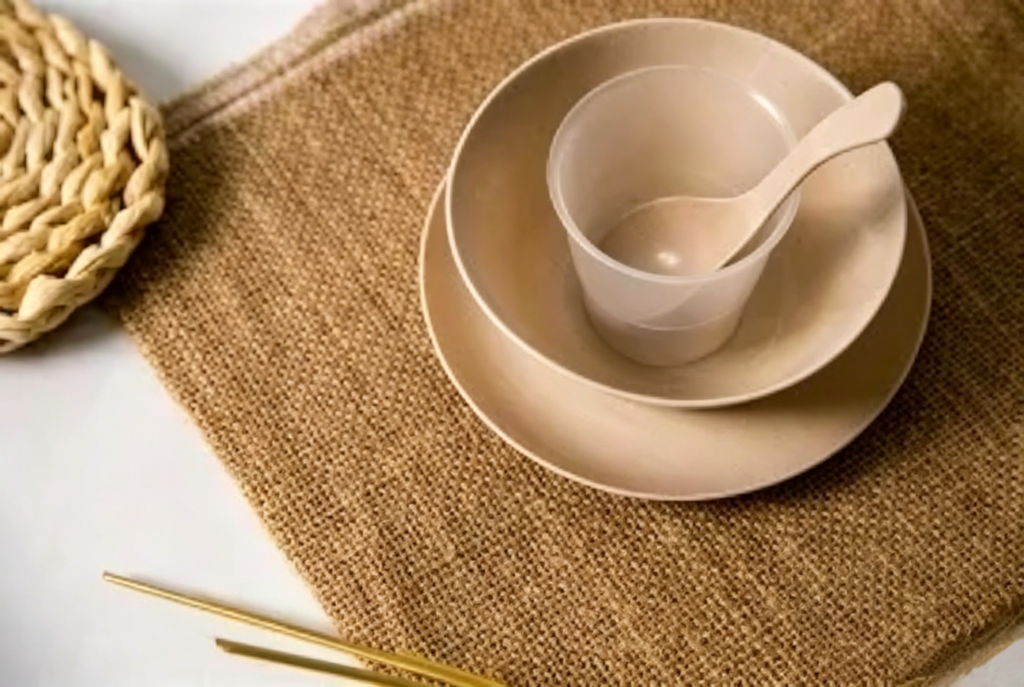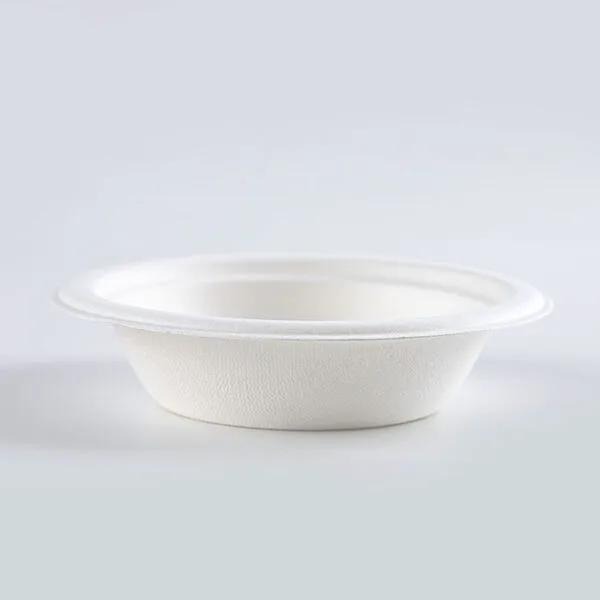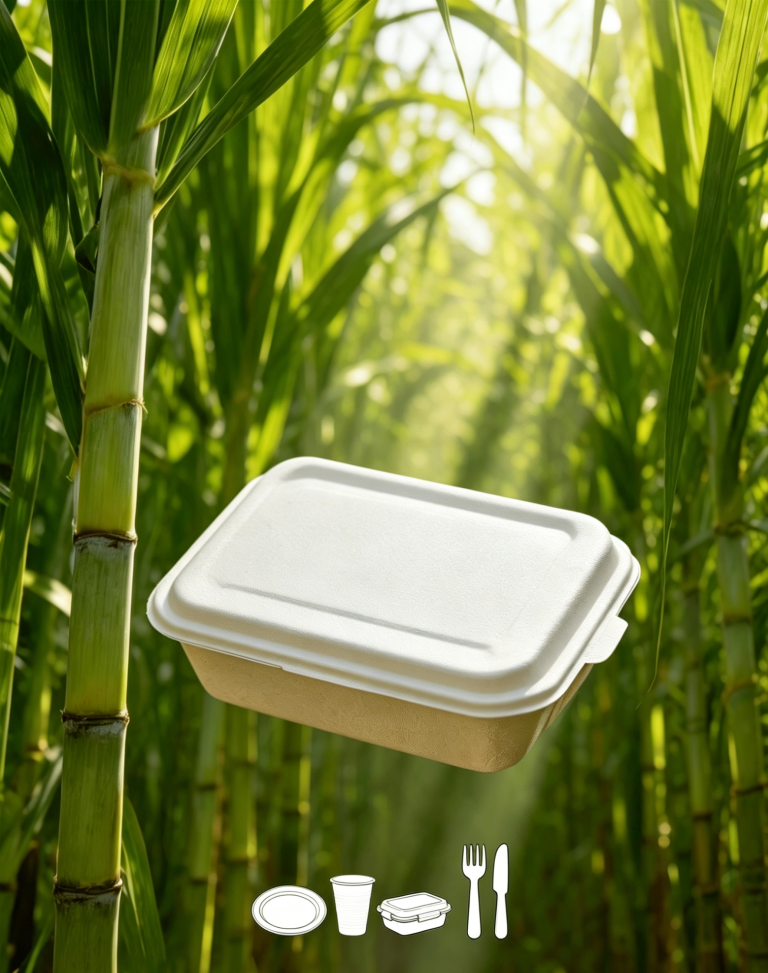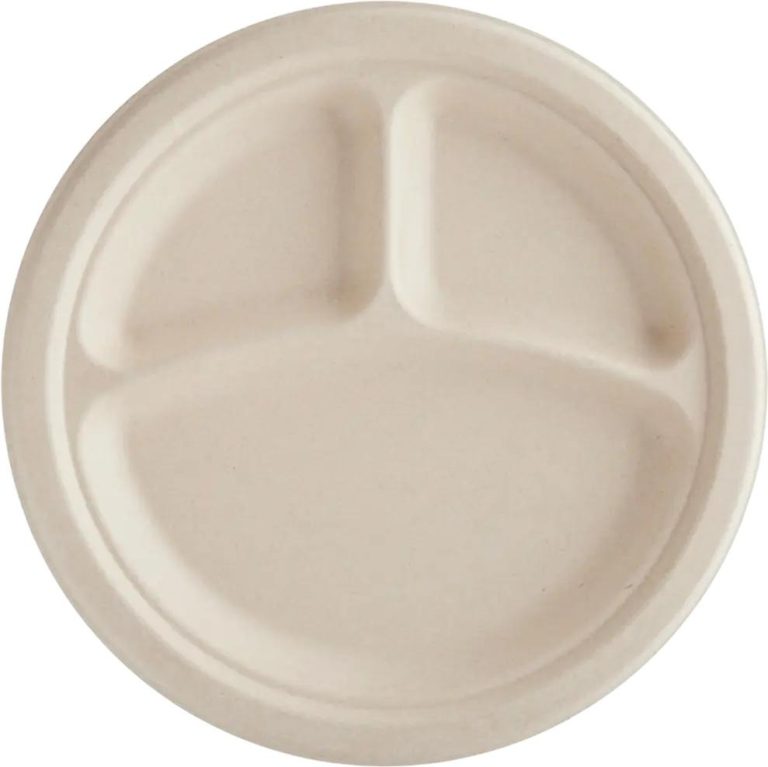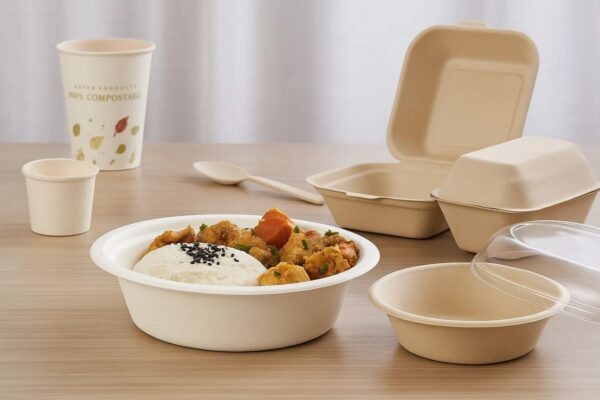
The material of the rice husk tableware is certainly not plastic! They are natural products formed by pressing rice hull fibers. The rice hulls are ground into powder, mixed with plant starch, and then subjected to high-temperature and high-pressure treatment. The lignin in it naturally adheres together, forming a sturdy bowl. This process retains the original texture of the rice hull and does not use any chemical adhesives throughout the process. It is truly an environmentally friendly set of utensils derived from the fields.
Rice husk tableware is not made of plastic. It is completely different from plastic and has superior properties compared to plastic. Here are the characteristics of rice husk tableware:
1. Natural biodegradation: It can completely decompose within 6 months after disposal, without generating microplastics.
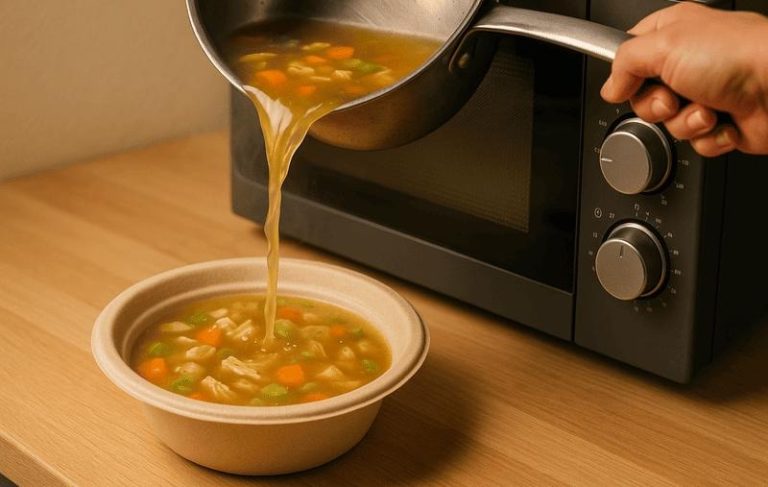
2. Heat resistance: It can withstand temperatures up to 120°C, and will not deform when holding hot soup.
3. Antibacterial properties: The silicon acid components in rice husk can inhibit the growth of some bacteria.
4. Touch experience: The surface has a slight textured feel, and its anti-slip performance is better than that of smooth plastic.
These two advantages are truly more reliable than plastic tableware:
1. Free of phthalates and bisphenol A, even when used for hot soup, it’s reassuring.
I checked the test reports of the three brands of tableware I bought. Phthalates and bisphenol A were all “not detected”. Many mothers have switched to rice husk tableware for their children’s food, precisely because of “naturalness” – when you get close and smell it, there’s only a faint aroma of rice, without the industrial smell of plastic. Even if children occasionally bite the edge of the bowls, they don’t worry about ingesting chemicals.
2. It can degrade in 90 days and there will be no pollution after disposal.
After plastic tableware is thrown away, it won’t decompose for several hundred years. When it breaks down into microplastics, they will enter the soil and water sources, and eventually be absorbed by vegetables, then enter the human body again. Rice husk tableware truly “comes from nature and returns to nature”: I cut a piece of the used lunch box and buried it in the flower pot. After two months, when I dug it out, there were only some fragments left. Mixed with the soil, it can still be used as fertilizer.
Moreover, it is also a “waste-to-resource” solution – previously, rice husks were either burned by farmers, emitting black smoke and polluting the air, or piled up on the field ridge and rotting and stinking. With 150 million tons of rice husks produced globally each year, now they are made into tableware, which not only reduces environmental pollution but also maximizes their value.
The truly 100% natural rice husk tableware can only be produced by thermally pressing agricultural waste. Its surface is rough and lacks luster. It can be identified by checking the packaging ingredients, observing the toughness and conducting a combustion test.
1. Review packaging and ingredient labels (the most direct method):
a. Avoid plastic codes: For high-quality pure plant fiber tableware, the ingredient list should only show “rice husk fiber”, “straw fiber”, or be supplemented with a small amount of natural starch adhesive. If the ingredient list contains words like PP (polypropylene) or PE (polyethylene), it indicates that it is a “pseudo-natural” product that has added plastic.
b. Check the standard number: For officially compliant degradable/eco-friendly tableware, the packaging must clearly display the food contact symbol and relevant implementation standards (such as national standard GB/T 18006.3-2020).
2. Odor and Appearance Identification (One Look and Two Smells)
a. Smell the odor: When genuine pure rice husk material comes into contact with hot water, it usually only emits a faint natural aroma of rice. If you smell a pungent plastic odor or industrial ink smell when opening the package or rinsing with hot water, it indicates that there is plastic or other chemical additives mixed inside.
b. Observe the color and texture: Pure rice husk products present a natural and plain beige or brown color, and the surface is not overly smooth. If the product color is too bright, glaring white, or extremely reflective, it usually contains fluorescent whitening agents or is coated with a high-gloss chemical waterproof film.
3. Combustion and Hardness Test (Physical Verification)
A. Combustion Method (For safety reasons, please conduct the test in a fireproof area such as a water tank):
a. Pure natural rice husk: When the edges are ignited, it will burn like paper or straw, emitting a faint aroma of grain charred, and after burning, leaving natural ashes.
b. Containing plastic materials: If it melts, drips plastic droplets, and emits pungent black smoke and burnt plastic odor, then it indicates the presence of PP and other petroleum-based plastic components.
B. Hot Water Softening (Testing Strength): True pure natural rice husk products are heat-resistant. However, when placed in boiling water or used for a long time, due to the absence of plastic components for reinforcement, the texture will become softer; if the tableware remains as hard as before when placed in boiling water, it indicates a large amount of traditional polypropylene plastic components.
On the shelves of the supermarket, rice husk tableware stands out prominently – the packaging is labeled “Natural Rice Husk” and “Biodegradable”. The salesperson also emphasized that “It contains no plasticizers and is safe for children to use.” Indeed, compared to plastic tableware that may release chemicals when heated, it seems to have both “health” and “environmental protection” features.