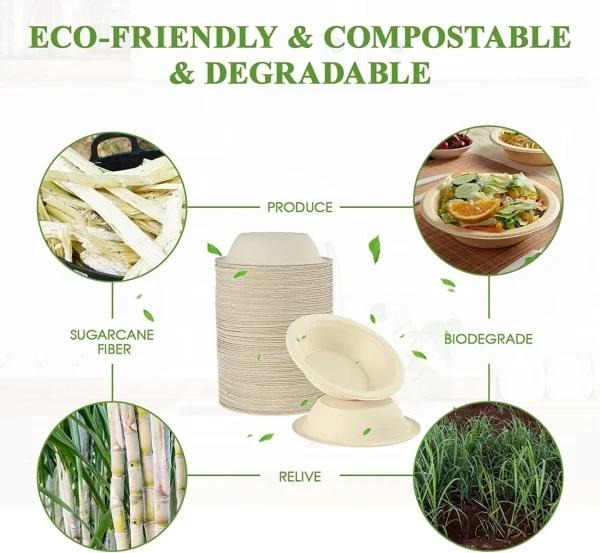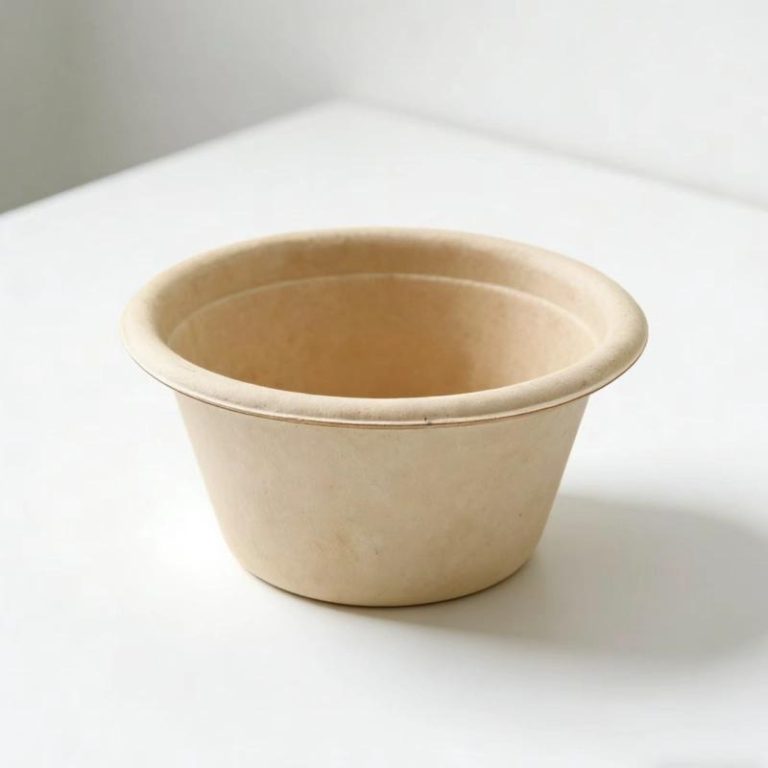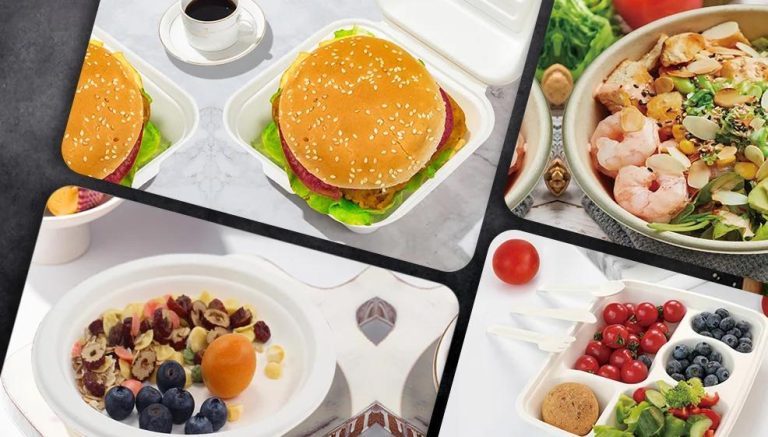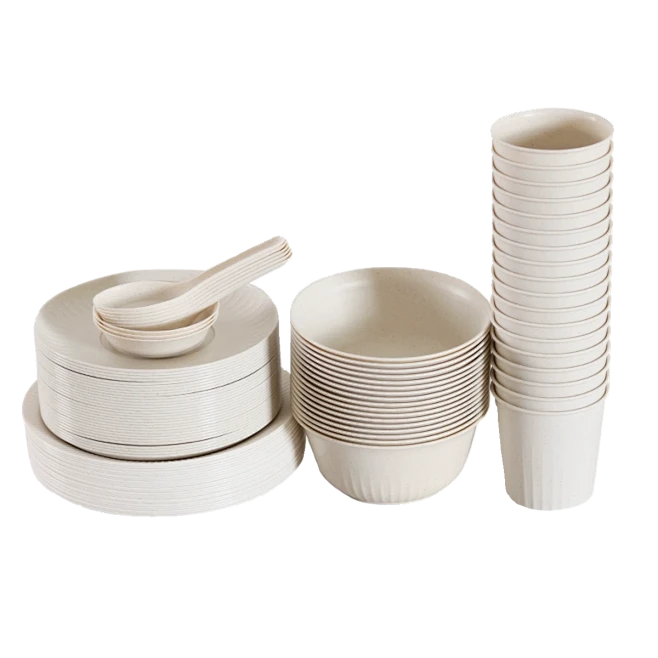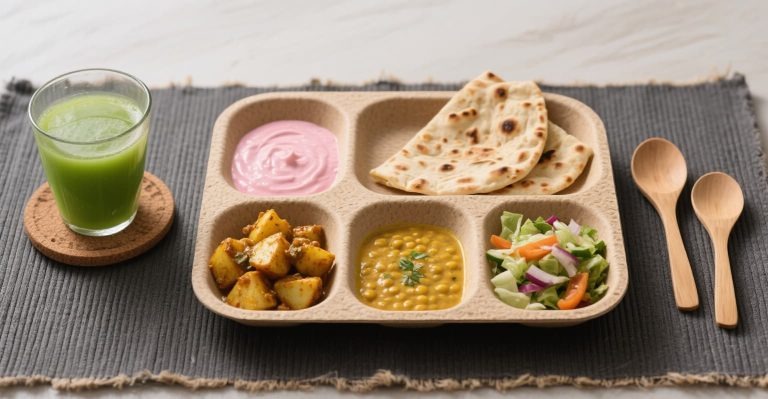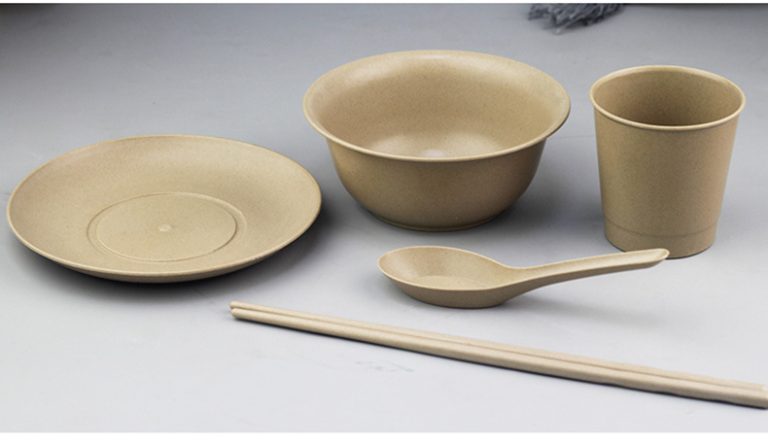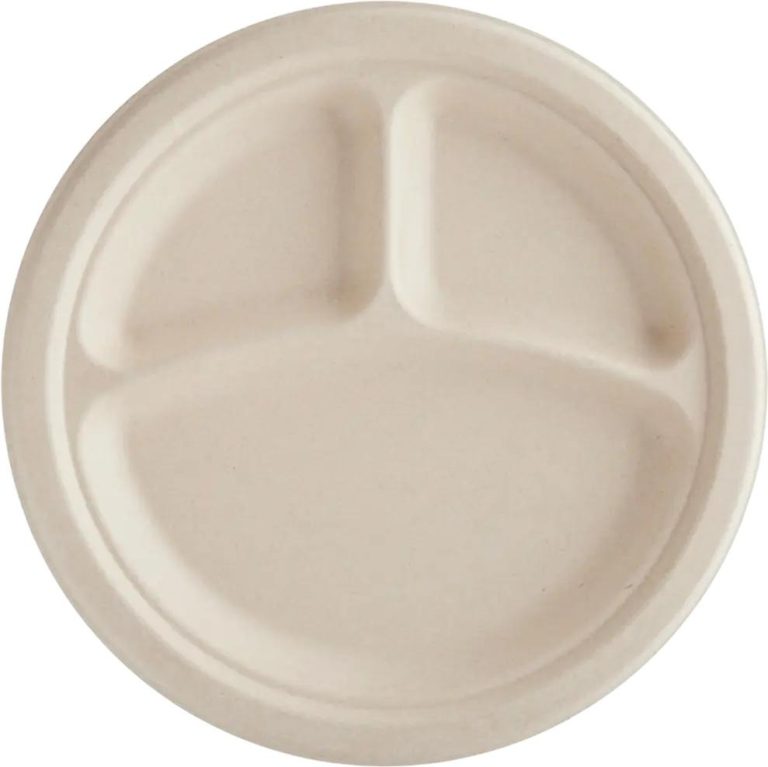
Say goodbye to “white pollution”. What’s behind the 90-day natural-returning sugarcane bagasse tableware? Have you ever wondered that the discarded sugarcane bagasse left after sugar extraction can actually be transformed into practical and environmentally friendly tableware? In the past, these large amounts of discarded sugarcane stalks were either burned or left unused, which not only wasted resources but also had an adverse impact on the environment. Now, they have been “turned from waste to treasure”, being made into disposable plates, bowls, cups, and so on, and there is a product called sugarcane bagasse tableware.
Plastic tableware usually takes hundreds of years to decompose in the natural environment, during which it can cause severe pollution to the soil, water sources, etc., resulting in the troublesome “white pollution”. However, sugarcane bagasse tableware is quite different. Due to its natural plant fiber properties, it can decompose in natural soil conditions within just 90 days. If it is in industrial composting, because of the specific temperature and humidity, the decomposition speed of sugarcane tableware is even faster. In home garden composting, the environmental conditions are mild, and it can completely decompose within 45 to 90 days. After decomposition, it becomes organic fertilizer and can fully return to nature within 60 to 130 days, nourishing the land and forming a perfect ecological environment. If randomly discarded in natural soil or outdoor environments, it will gradually decompose within several months and will not form permanent plastic waste.
From the perspective of carbon emissions, it can reduce approximately 97% of carbon dioxide emissions compared to traditional plastic tableware. Moreover, it uses agricultural waste instead of cutting down trees. For every 1 ton of sugarcane residue used, about 25 trees can be saved from being cut down. Producing 1 ton of sugarcane residue is equivalent to saving approximately 2,500 trees. This allows more trees to grow more vigorously in the forest, and these trees not only absorb carbon dioxide and release oxygen, but also provide a habitat for the creatures in nature.
The temperature range of the bagasse tableware is approximately -18°C to 220°C. This type of tableware can be placed in a microwave oven and also in the refrigerator for refrigeration. It is suitable for short-term use in a microwave oven with medium-low heat, typically for 1-2 minutes, and can be heated in multiple sessions. It can preserve food in the refrigerator and is suitable for short-term refrigeration or freezing storage. If you plan to freeze and store it for several months, it is recommended to wrap it in plastic wrap or a sealed bag to prevent food from drying out or getting contaminated. It has waterproof and oil-resistant properties. It can withstand 100℃ hot oil or hot water for half an hour without any problems. The sugarcane residue tableware is a non-fluorine product and does not contain fluorine during production, making it safer.
Sugarcane bagasse tableware is an environmentally friendly tableware on the contemporary dining table. In this era that pursues sustainable development, people pay more attention to environmental protection. This concept has also permeated every aspect of life, significantly reducing the pressure on the earth. Using sugarcane pulp tableware initiates a green dining revolution.